Kitchen
Gas or Induction? Planning Your Kitchen Around the $400 Climate Vouchers
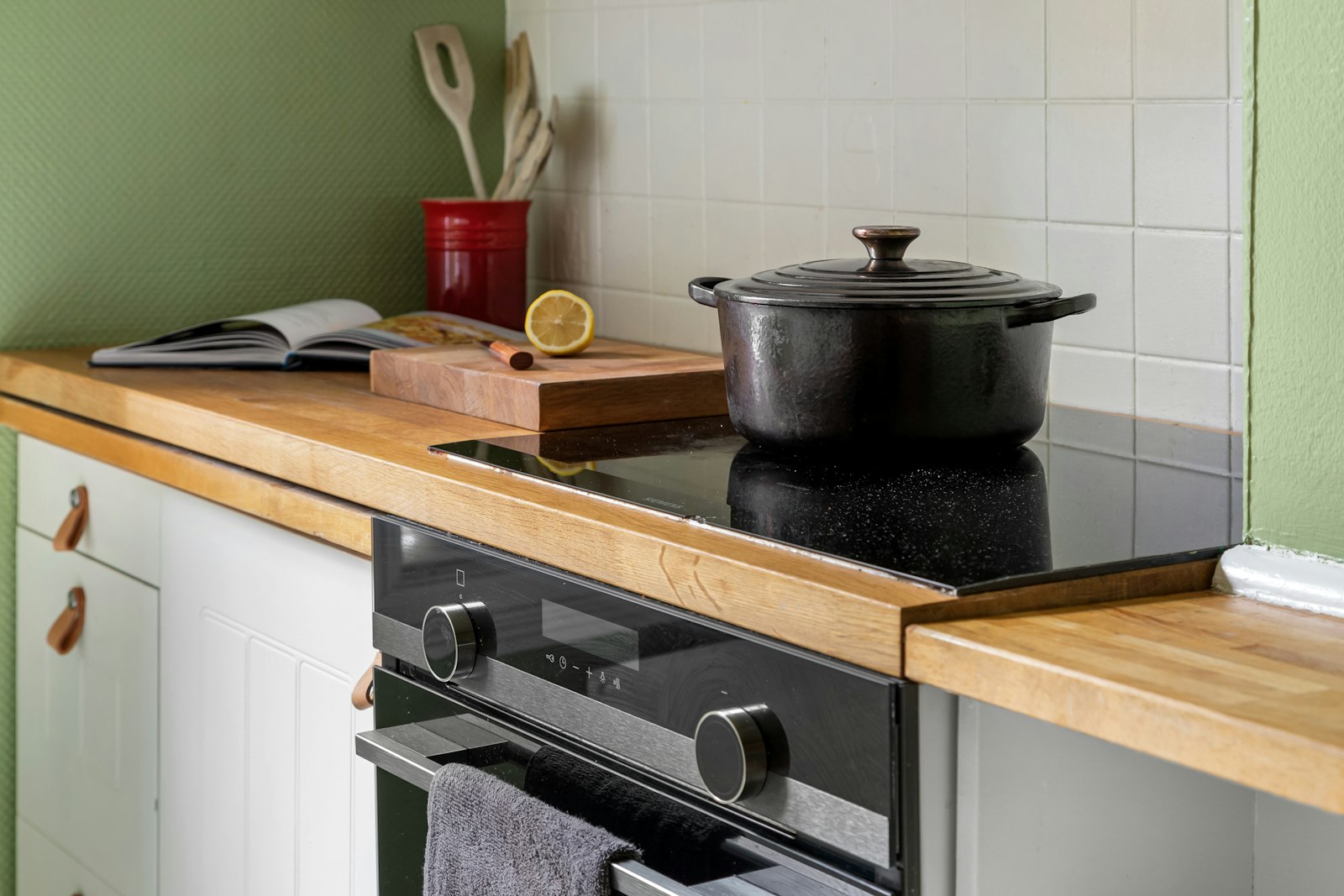
Induction hobs now qualify for Climate Vouchers. What to know about wiring, gas capping and cooking style before you switch in your reno.
October 20, 2026
The Assembly Design
Since 15 April 2026, induction stoves have been on the list of products you can buy with Climate Vouchers. If you're renovating a kitchen, that turns an old debate, gas or induction, into a slightly easier one.
The vouchers, quickly
Every HDB household can get $400 in Climate Vouchers, and so can Singaporean households living in private property. You do need to claim them first, at go.gov.sg/cv-claim, and they expire on 31 December 2027. They're spent at participating retailers on eligible energy- and water-efficient products, which now include induction stoves and 5-tick clothes dryers alongside things like efficient fridges and air-conditioners. Not every retailer carries every eligible model, so ask the shop which hobs qualify before you choose.
$400 won't pay for your whole kitchen. It can take a real chunk off a hob, though, and that's worth planning for before you lock the cabinet drawings.
The honest case for each
Induction heats the pan directly, so the kitchen stays cooler, the surface is flat and easy to wipe, and there's no open flame. For households that mostly boil, steam, stir-fry lightly and cook for a family, most people don't look back.
Gas still wins for some cooks. If your weekly menu is heavy on high-heat wok frying and you care about wok hei, you'll feel the difference. Round-bottomed woks also don't sit well on a flat induction surface.
Plenty of households land in the middle: an induction hob for everyday cooking and a single gas burner, or a portable one, for the dishes that need a flame. There's no rule that says you have to pick a side.
What changes in the renovation
- Power. An induction hob needs its own properly rated power point. Tell your designer the model early so the electrician can plan the wiring, especially in older flats where the original wiring may already be stretched. Our resale HDB checklist covers what to look for in the electrical box.
- Gas. If you're removing gas completely, the supply has to be capped by a licensed gas service worker. Don't let anyone improvise this.
- Cabinet cut-out. Hobs have different cut-out sizes. Choose the model before the countertop is fabricated, not after. Changing it later is a classic source of variation orders.
- The hood still matters. Induction means less heat, not less oil and smoke. Plan the cooker hood with the same care.
- Cookware. Induction needs magnetic pans. Check what you own before moving day.
Questions to settle before the kitchen is drawn
- Which dishes do you cook most weeks, and do any of them need a big flame?
- Who cooks, and does more than one person cook at the same time?
- Do you want gas kept as a back-up, capped for good, or removed completely?
- Which hob model, with what power rating and cut-out size?
- Where does the hot wok or pot go when you lift it off the hob?
A good designer should be asking you these. If nobody does, the kitchen is being drawn around a catalogue, not around you.
The decision that actually matters
Forget what looks good in showroom photos. Think about the last ten meals you cooked. That tells you more about gas versus induction than any spec sheet, and it should shape the whole kitchen: where the hob sits, how much counter you need beside it, and where the dirty wok goes.
Redoing your kitchen?
Tell us how you actually cook on our enquiry page, or WhatsApp us. We'll design the kitchen around that.